What is an RCSA and Why It Matters
A deep dive into RCSA tool heavily used in Operational Risk Management frameworks
6/16/20266 min read
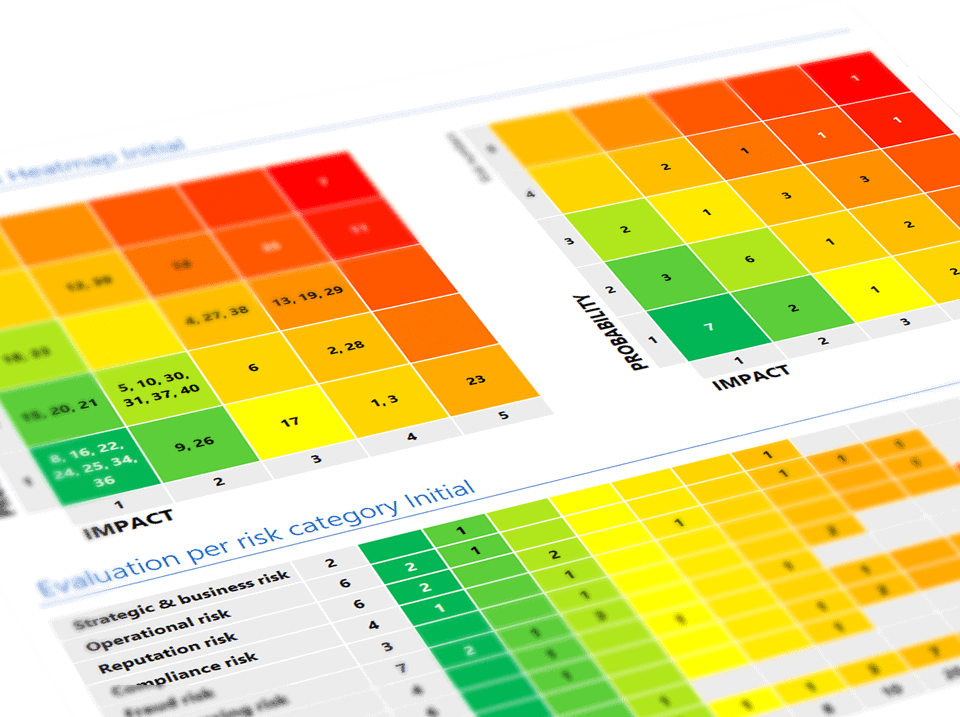
A Risk and Control Self Assessment (RCSA) is a structured mechanism used within an operational risk management framework to estimate operational risk exposures and evaluate the effectiveness of the controls designed to manage them.
What is an RCSA?
At its core, an RCSA is a process that allows an organisation to prioritise risk exposures, identify specific weaknesses or gaps in its controls, and monitor the progress of actions taken to address those issues. It is more than just a technical exercise; it serves as a platform for open discussion about risks that are often difficult to identify or quantify due to a lack of historical data or because they are newly emerging.
Why It Matters
Implementing an effective RCSA is critical for several key reasons:
Culture and Awareness: A well-designed RCSA helps embed risk management into the daily operations of an organisation. It improves management's attitude toward risk and enhances the overall risk culture by involving multiple individuals to reduce subjective bias and share expertise.
Proactive Management: Because many operational risks are hard to quantify, the RCSA encourages proactive discussion. Organisations that openly discuss risks and control effectiveness are better prepared for future events.
Governance and Compliance: The results of an RCSA provide essential assurance to governing bodies and regulators that the organisation has a sound system for managing operational risks. It also assists internal and external auditors in prioritising their work and structuring their reports.
Business Efficiency: RCSAs help identify whether a risk is under-controlled or over-controlled.
Under-controlled risks increase the chance of process failures and costs.
Over-controlled risks can unnecessarily slow down systems and processes.
Strategic Integration: When updated regularly, RCSA data can be fed into annual budgetary and performance reviews, ensuring that operational risk management is linked to the organisation's strategic objectives.
In contrast, the sources warn that a poorly designed or overly complex RCSA can be damaging, reinforcing a perception that risk management is merely a bureaucratic "box-ticking" exercise rather than a value-adding business tool
Methods to conduct a RCSA:
To conduct a Risk and Control Self Assessment (RCSA), organizations can utilize several primary methods and techniques, ranging from highly interactive group sessions to anonymous expert consensus.
1. Workshop Approach
The workshop approach is a common technique that ensures human interaction and engagement. It is particularly effective because it allows for the sharing of diverse expertise and experience, which helps to mitigate individual subjective biases.
Benefits: It raises awareness of operational risks, allows for the assessment of "softer" controls (like training and culture), and provides an opportunity to transfer risk management skills across the organization.
Structure: Workshops are often broken into modules—describing risks, identifying controls, and action planning—to maintain focus and prevent fatigue.
Facilitation: A skilled facilitator (internal or external) is essential to manage discussions, challenge biases, and ensure the process is followed.
2. Questionnaires
Questionnaires are used to collect information and can either substitute for or complement workshops. They are especially effective for reaching a wider audience across the organization.
Types: They can be exploratory (identifying new risks) or confirmatory (starting with a pre-set list of risks and controls).
Design: They should be kept short to prevent respondent fatigue and typically use even-numbered scales (like a 4-point Likert scale) to force a definitive response rather than allowing "fence-sitting".
3. Structured What-If Technique (SWIFT)
SWIFT is a systematic, team-oriented technique often used in hazardous sectors like chemical processing or nuclear power.
Process: It uses structured "what-if" and "how-could" questions to explore how deviations from normal operations might lead to risk events.
Resources: While expensive due to the time and expertise required, it is more likely to address all relevant risk events and controls.
4. Delphi Technique
This is an information-gathering tool used to reach a consensus among a group of experts.
Process: Experts participate anonymously. A facilitator solicits ideas via questionnaire, summarizes the responses, and recirculates them for further comment until consensus is reached.
Benefits: Anonymity encourages honesty and prevents any single person from having undue influence over the assessment.
5. Root Cause Analysis
This method focuses on the "how" and "why" behind potential risk events, assuming that events have multiple underlying causes.
Technique: It often employs the "five whys" technique to drill down into the underlying process failure (e.g., asking "why" five times to move from a fire event to a failure in safety inspection procedures).
Focus: It is primarily used for the most significant operational risks because it is time-consuming.
6. Top-Down vs. Bottom-Up Completion
Beyond the specific data collection technique, RCSAs are generally designed in one of two ways:
Top-Down: Completed by senior management, focusing on strategic risks that threaten organizational objectives.
Bottom-Up: Focused on departmental or functional levels to help local managers prevent losses and improve process efficiency. Most organizations use a combination of both to ensure alignment across all levels.
Preparation before a RCSA session:
Proper preparation is considered key to ensuring a successful RCSA workshop. Before entering a session, the following details and actions should be prepared:
1. Secure Leadership and Local Support
Obtain Executive Support: The risk committee or equivalent should communicate its support to risk and control owners. Ideally, a senior manager should attend the first five minutes of the workshop or provide a short video to communicate the session's importance.
Engage Local Management: Contact managers in the area being assessed to ensure they understand the RCSA's benefits and to secure their commitment to completing any identified actions within agreed timescales.
2. Define Scope and Objectives
Identify Priority Areas: Determine which departments or functions have an urgent need for a workshop by reviewing loss and near-miss data, internal audit reports, or identifying inherently high-risk areas.
Set the Scope: Agree with participants on what will be considered, such as specific categories of operational risk (e.g., IT risks) or specific customer processes.
3. Information and Process Review
Review Activities and Processes: It is critical to understand the operations of the area to select the right participants.
Gather Existing Data: Review previous operational risk assessments and any available historical loss or near-miss data.
Pre-identify Risk Categories: It is recommended that primary categories of risk (e.g., Level 1 categories) are identified in advance to save time during the actual workshop.
4. Participant and Facilitator Organization
Select Attendees: Identify and invite a range of participants (typically 6–8 people, maximum 12) including:
Risk Owners and local management representatives.
Control Owners responsible for maintaining safeguards.
Subject Matter Experts in areas like IT, HR, Finance, or Marketing.
An Independent Observer (from the risk function or another department) to monitor for potential bias.
Appoint a Facilitator: Organize an impartial expert skilled in the RCSA process to manage the discussion, challenge biases, and maintain momentum.
5. Documentation and Orientation
Provide Guidance in Advance: Participants should receive guidance before the workshop so they fully understand the context, objectives, and their expected contribution.
Supply Standard Documentation: Distribute the RCSA process description and the workshop agenda so attendees know exactly how the session will be performed.
Preliminary Data Collection: If using a combined approach, you may use a questionnaire before the workshop to collect the initial thoughts of participants for discussion during the session.
Challenges in RCSA process:
Common challenges in the Risk and Control Self Assessment (RCSA) process primarily involve balancing technical complexity with practical business value. The sources identify the following key difficulties:
Bureaucracy and Reputational Risk
Perception of "Box-Ticking": An inefficient or unnecessarily complex RCSA can reinforce the view that risk management is merely a bureaucratic, compliance-focused exercise rather than a tool for achieving organizational objectives.
Reputational Damage: If the RCSA process is poorly implemented, it can damage the reputation of the operational risk function within the wider organization.
Design and Resource Challenges
Information Overload: Attempting a fully comprehensive approach for hundreds or thousands of risk exposures can be excessively time-consuming and expensive, leading to information overload.
Cost vs. Benefit: Organizations often struggle to ensure the RCSA is value-adding; the costs of completion and regular updates must not exceed the benefits.
Tool Selection: Purchasing "off the peg" IT systems for RCSAs can be problematic if they are not customizable to the organization's specific risk culture.
Subjectivity and Bias
Individual Bias: RCSAs completed by a single person (like a risk owner alone) are highly susceptible to subjective bias, which leads to inaccurate exposure assessments and wasted resources.
Conceptual Assessments: Assessing inherent risk (risk with zero controls) is often difficult because risks rarely exist in a control-free environment, making these assessments conceptual and prone to judgment errors.
Management Dominance: In workshop settings, there is a risk that senior managers may dominate discussions or discourage others from raising concerns, potentially using the session to pursue political agendas.
Participant Engagement and Fatigue
Workshop Fatigue: Sessions exceeding two to three hours can lead to participant fatigue, resulting in reduced focus and inaccurate data.
Respondent Fatigue: Long questionnaires may lead to respondents giving up or providing random, low-quality answers.
"Fence-Sitting": When using odd-numbered scales in questionnaires, respondents often choose the middle value to avoid taking a definitive stance.
Methodological Limitations
Time and Expertise: Specialized techniques like SWIFT, the Delphi technique, and Root Cause Analysis are noted as being particularly time-consuming and expensive, often making them impractical for all risks.
Over-Control Risks: There is a danger in assuming more control is always better; increasing controls can reduce system efficiency and even create unforeseen new risks, such as staff writing down passwords because they are forced to change them too frequently.
Example:
As organizations face increasing operational, regulatory, cyber, and third-party risks, RCSA remains one of the most effective tools for proactively identifying vulnerabilities and strengthening the control environment. When implemented effectively, it enables informed decision-making, enhances accountability, and contributes to long-term operational resilience.
Portfolio
Showcasing my skills, education, and experiences online.
Connect
shubhamghotankar@gmail.com
+32 0465 86 03 92
© 2025. All rights reserved.